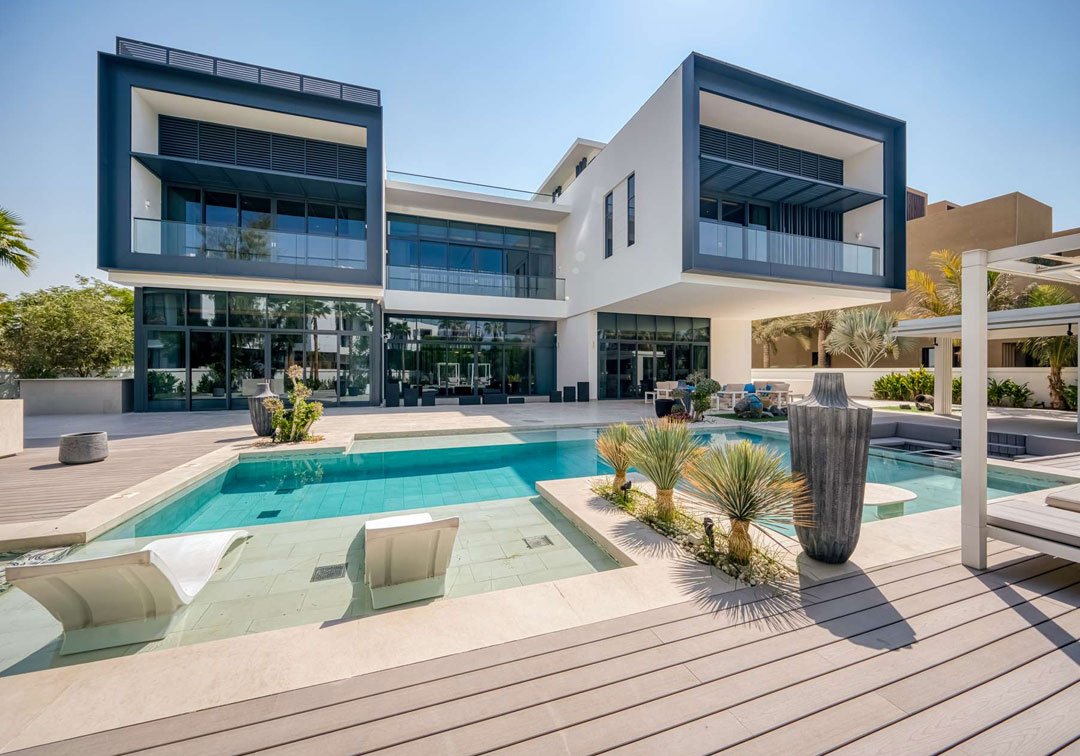
Dubai property trend: Owners spend up to $5.4m on villas as kitchens, pools and smart homes transform
Dubai homeowners are spending up to $5.4m renovating luxury villas as rising property values reshape kitchens, pools, smart homes and buyer priorities.
Dubai’s luxury homeowners are investing millions of dirhams transforming existing villas as rising property values and changing lifestyle priorities reshape what buyers expect from high-end homes.
Renovation budgets can reach AED20m ($5.4m), while demand for luxury villa renovations has increased by an estimated 35 to 50 per cent over the past five years, according to Imperium Group.
Separate analysis from K4 and BlackBrick Property points to growing demand for upgraded kitchens, pools, smart-home systems, wellness spaces and more personalised interiors as owners increasingly consider how properties function and retain their appeal over the longer term.
Dubai-based multidisciplinary design consultancy Imperium Group estimates that demand for luxury villa renovations has increased by 35 to 50 per cent over the past five years.
Approximately half of its current luxury residential clients purchase villas with renovation already planned, according to the company.
Dubai villa renovations reach $5.4m
Homeowners typically invest between 10 and 25 per cent of a property’s purchase price into renovation works. For extensive transformations involving structural reconfiguration, bespoke interiors, upgraded building systems and landscaping, spending can exceed 30 per cent.
Individual renovation budgets can reach AED20m ($5.4m).
Over the past three years, Imperium has delivered approximately 30 to 40 luxury renovation projects, ranging from targeted interior upgrades worth around AED700,000 ($191,000) to complete villa transformations exceeding AED20m ($5.4m).
One of its largest projects involved the full redevelopment of a villa in Emirates Hills, incorporating architectural, structural, interior, landscape and smart-home upgrades over an 18 to 24-month programme.
Karim Karam, Founder of Imperium Group, said: “Luxury homeowners today aren’t simply upgrading finishes or refreshing interiors. We’re seeing clients rethink almost every aspect of a property. They are buying exceptional locations and then creating homes that are entirely their own. In many cases, renovation has become part of the acquisition strategy itself, allowing owners to secure prime addresses while designing spaces around the way they want to live, rather than compromising on an existing layout.”
Rising Dubai property values change renovation decisions
The trend comes as Dubai’s wider property market records significant transaction and investment activity.
Dubai recorded AED252bn ($68.6bn) in real estate transactions in Q1 2026, up 31 per cent year on year, while real estate investment reached AED173bn ($47.1bn), an increase of 22 per cent, according to market data analysed by UAE-based design and build company K4.
K4 said rising residential values are encouraging homeowners to bring existing properties into line with their current market value and intended long-term use.
Average apartment prices on Palm Jumeirah increased 31 per cent year on year in Q3 2025, while villa capital values in Jumeirah Islands rose 17.9 per cent annually in June 2026.
The age of housing stock in some established villa communities is also influencing investment decisions. Properties built more than a decade ago can require their original layouts, kitchens, bathrooms and technical systems to be modernised to meet current expectations.
Joakim Kihlstrom, CEO of K4, said: “The conversation around renovation has changed considerably. Homeowners are still interested in how a property looks, but there is much more attention now on how it functions. Kitchens, air-conditioning, lighting, storage, technology and outdoor areas are increasingly being looked at together rather than as individual upgrades.
“Property values also play an important role. When the underlying asset has appreciated significantly, particularly in an established community, owners have a stronger reason to invest in improvements that will work for them over the longer term rather than make a series of short-term cosmetic changes.”
Kitchens, pools and smart homes attract investment
Both K4 and Imperium Group point to a shift from primarily cosmetic upgrades towards more extensive transformations.
K4 said kitchens and back-of-house areas are attracting some of the largest allocations, including show kitchens supported by preparation kitchens, pantries, integrated appliances and specialist storage.
Master suites and bathrooms are another priority, with larger dressing areas, natural stone and more considered bathroom layouts appearing in renovation briefs.
Air-conditioning, lighting controls, acoustics, security and smart-home technology are increasingly considered earlier in projects.
Pools, terraces, landscaping and outdoor kitchens are also being designed as extensions of interior living spaces, while home offices, cinemas, gyms, wellness rooms and flexible spaces are becoming more common.
Imperium has observed a similar shift towards projects encompassing architectural redesign, structural modifications, complete MEP replacement, bespoke joinery, integrated smart-home technology, wellness facilities, show kitchens, service kitchens and extensive landscape redesign.
Dubai luxury homes move away from open-plan design
Separate analysis from global real estate advisory firm BlackBrick Property and ultra-luxury interior design practice Blush International indicates that luxury design preferences are also changing.
Kate Instone, Founder and CEO of Blush International, said homeowners are moving away from vast open-plan spaces and generic show-home aesthetics towards more personal, functional and enduring properties.
Traditional back-of-house spaces are increasingly becoming what Instone describes as “daily wings”, with boot rooms, family entrances, prep kitchens, pantries, laundry rooms and dog rooms receiving the same attention to craftsmanship as formal entertaining areas.
Separate rooms are also returning, including libraries, morning rooms, breakfast rooms, wellness spaces and private retreats.
Natural stone, solid timber and bespoke joinery designed to age well are also gaining prominence over finishes selected primarily for immediate visual impact.
“Luxury is becoming less about creating the perfect show home and more about creating a home with identity,” says Instone. “The most discerning clients want interiors that are personal to them and designed to last. They are looking for craftsmanship, beautifully considered everyday spaces and rooms with a distinct purpose, but also for personality – art, objects, furniture and materials that tell a story and make a home feel impossible to replicate.”
How renovation trends differ across Dubai communities
K4 identified Palm Jumeirah, Jumeirah Golf Estates, Jumeirah Islands, Emirates Hills and Dubai Hills Estate as five communities where different renovation drivers are evident.
On Palm Jumeirah, rising secondary-market values are contributing to more comprehensive renovations of older villas, penthouses and large apartments, including layouts, kitchens, MEP systems, glazing, smart-home infrastructure, pools and landscaping.
In Jumeirah Golf Estates, K4 said long-term family occupation is a more significant driver, with homeowners adapting villas through larger kitchens, offices, upgraded bathrooms, entertainment spaces, gardens, pools, terraces and outdoor dining areas.
Jumeirah Islands is seeing renovation interest coincide with limited villa supply, rising values and ageing housing stock. Projects can address layouts, extensions, façades, ageing MEP systems, pools and landscaping.
Renovations in Emirates Hills are lower in volume but larger in individual scale, potentially encompassing structural work, specialist engineering, MEP and landscaping as well as family, guest and staff areas.
In Dubai Hills Estate, comparatively newer housing stock is generating more post-handover personalisation, including kitchen improvements, bespoke joinery and storage, lighting, smart-home technology, pools, landscaping and selective layout changes.
Imperium Group has also identified established communities including Emirates Hills, Palm Jumeirah, Dubai Hills Estate, District One and Al Barari as locations where buyers are purchasing villas before undertaking extensive renovations.
Karam said: “Five years ago, clients were often looking for a house that matched their requirements. Today, they’re looking for the right address. They know that if the location is exceptional, almost everything else can be redesigned. That’s changing the role renovation plays within Dubai’s luxury residential market and reflects a market that’s becoming increasingly mature, design-conscious and focused on long-term ownership.”
What are Dubai villa buyers looking for?
Renovation is only part of the trend, with BlackBrick’s analysis providing an indication of which features can attract attention when villas reach the sales market.
Based on the brokerage’s lead volumes over the past three months, Arabian Ranches, Victory Heights, The Lakes, Tilal Al Ghaf and The Meadows generated the greatest buyer interest among the villa communities it tracked.
BlackBrick said recurring search terms on Dubai’s major property portals include “brand new”, “balcony”, “pool” and “corner”.
It advises sellers to make lifestyle features including pools, balconies, renovations, larger plots and corner positions prominent in listing descriptions and photography.
Matthew Bate, Founder and CEO of BlackBrick Property, said: “What is interesting here is that the fundamentals of buyer searches remain consistent year on year. A property that showcases a lifestyle that resonates with the buyer is at the heart of a successful purchase, whether that’s wellness, community values or connectivity to business hubs.
“Always remember the importance of a property’s small details that give clues about its unique personality. Architectural features, unusually designed rooms, and landscaping all tell a story about a property and immediately make it stand out. Yes, the basics might get a buyer in the door for a viewing, but it’s these details that will capture the imagination of a buyer and help secure a sale.”
How to prepare a Dubai villa for sale
BlackBrick recommends resolving small maintenance issues, refreshing tired paintwork and ensuring properties are well presented before professional photography and viewings.
It also advises sellers to emphasise lifestyle factors such as greenery, schools, connectivity, community amenities and privacy, while identifying individual features that distinguish a property from competing listings.
For properties above AED15m ($4.1m), BlackBrick said staging can help buyers connect with a property and reinforce its value.
It also recommends photographing homes while they are still furnished where possible, making it easier for prospective buyers to visualise the property and helping listings differentiate themselves online.
The combined trends indicate an evolving relationship between acquisition, renovation and eventual resale in parts of Dubai’s villa market.
Kihlstrom said: “The reason someone renovates a home on Palm Jumeirah can be very different from the reason someone does the same in Dubai Hills. One may be bringing an older property up to the level expected of a high-value secondary-market asset, while the other may simply want to personalise a recently completed home.
“What connects them is that buyers are thinking more carefully about the property after the transaction. The purchase itself is increasingly only the first part of the investment.”
Credits & Disclaimer: This article are credited to the Associated Press, it's authors and editors. Likewise, the images are for illustration purposes only and credited all to their respective owners. The accuracy of the article is subject from the information grabbed from the sources at the time of posting this article.